

Blog
1GbE vs 10GbE vs 40GbE vs 100GbE – Complete Speed Comparison Guide

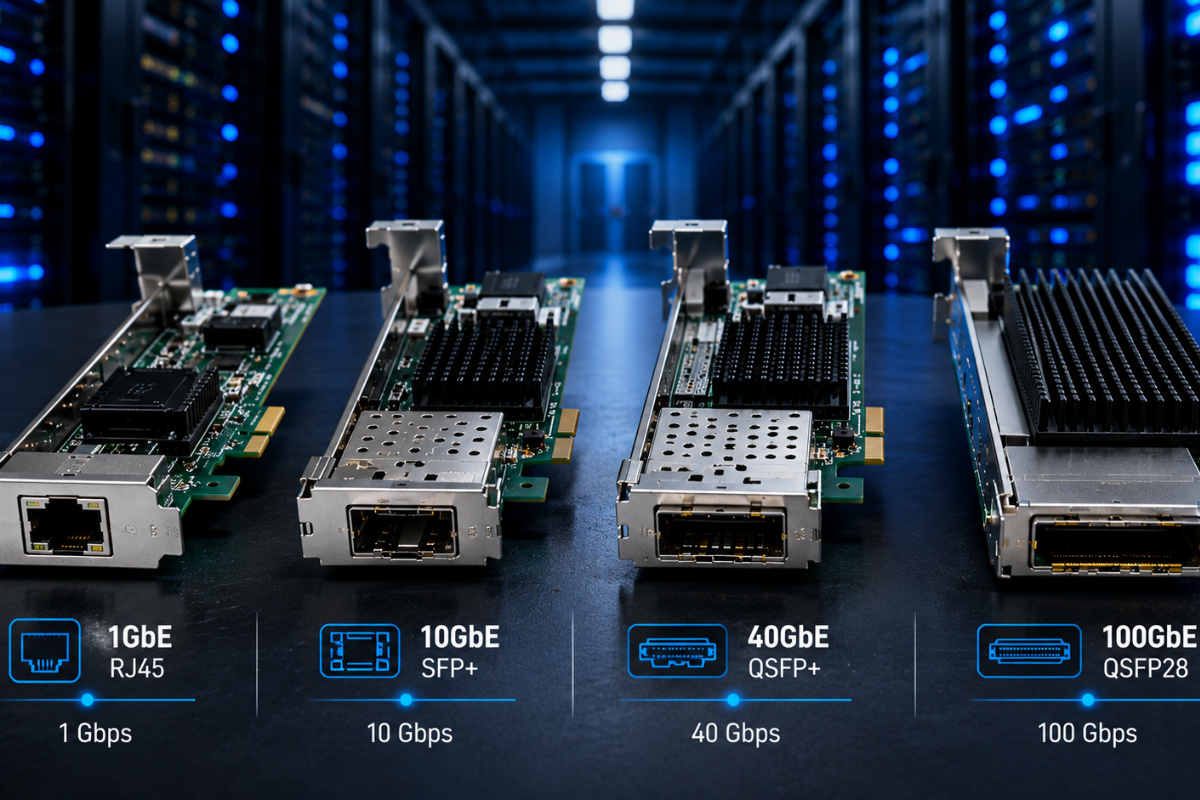
Learn the differences between 1GbE, 10GbE, 40GbE, and 100GbE network speeds. Discover which server network card is best for your business and IT infrastructure.

Introduction
As businesses continue to generate and process larger volumes of data, choosing the right network speed has become more important than ever. Whether you're operating a small office, an enterprise data center, or a cloud environment, selecting the correct Ethernet speed directly impacts performance, reliability, and future scalability.
This guide explains the differences between 1GbE, 10GbE, 40GbE, and 100GbE, helping you determine the best networking solution for your infrastructure.
What is Ethernet Speed?
Ethernet speed refers to how fast data can be transferred between devices over a network. The higher the speed, the more data your server can transmit and receive in a shorter period.
Choosing the right speed ensures better performance for applications such as virtualization, cloud computing, backups, video streaming, and large-scale databases.
1GbE (1 Gigabit Ethernet)
Maximum Speed: 1 Gbps
1GbE is the most common networking standard used in homes, offices, and small businesses. It provides stable performance for everyday networking tasks and basic server applications.
Advantages
- Cost-effective
- Easy deployment
- Wide compatibility
- Reliable for standard workloads
Best For
- Small Businesses
- Office Networks
- File Sharing
- Web Hosting
- Entry-Level Servers
10GbE (10 Gigabit Ethernet)
Maximum Speed: 10 Gbps
10GbE is ten times faster than traditional Gigabit Ethernet. It significantly improves data transfer speeds and is widely used in enterprise environments.
Advantages
- High-speed performance
- Lower latency
- Faster backups
- Improved virtualization
Best For
- Enterprise Servers
- NAS Storage
- Virtual Machines
- Database Servers
- Video Editing Networks
40GbE (40 Gigabit Ethernet)
Maximum Speed: 40 Gbps
40GbE is designed for organizations handling massive data traffic and requiring extremely high bandwidth.
Advantages
- Excellent throughput
- High bandwidth
- Reduced bottlenecks
- Efficient data center networking
Best For
- Data Centers
- Cloud Computing
- Large Enterprises
- High-Speed Switching
- Big Data Applications
100GbE (100 Gigabit Ethernet)
Maximum Speed: 100 Gbps
100GbE is the latest enterprise networking standard, providing exceptional speed and scalability for modern infrastructures.
Advantages
- Ultra-high bandwidth
- Future-ready technology
- Exceptional reliability
- Maximum performance
Best For
- AI Infrastructure
- High Performance Computing (HPC)
- Cloud Service Providers
- Enterprise Core Networks
- Large Data Centers
Speed Comparison
| Ethernet Speed | Data Transfer Rate | Best Use |
|---|---|---|
| 1GbE | 1 Gigabit/sec | Small Offices & Basic Servers |
| 10GbE | 10 Gigabit/sec | Enterprise Servers & Storage |
| 40GbE | 40 Gigabit/sec | Data Centers & Cloud |
| 100GbE | 100 Gigabit/sec | AI, HPC & Large Enterprises |
Which Speed Should You Choose?
Choose 1GbE if:
- You operate a small office.
- Your workloads are light.
- Budget is a priority.
Choose 10GbE if:
- You need faster file transfers.
- You run virtualization platforms.
- You manage enterprise servers.
Choose 40GbE if:
- Your organization handles large-scale data traffic.
- You require high-speed server communication.
- You manage a data center.
Choose 100GbE if:
- You need maximum network performance.
- Your infrastructure supports AI or cloud computing.
- You require future-proof networking.
Benefits of Upgrading Your Network Speed
Upgrading to higher Ethernet speeds offers several advantages:
- Faster data transfer
- Reduced network congestion
- Better server performance
- Lower latency
- Improved productivity
- Future-ready infrastructure
- Enhanced scalability
Why Buy High-Speed Server Cards from ServerCard.in?
At ServerCard.in, we offer a comprehensive range of 1GbE, 10GbE, 40GbE, and 100GbE Server Network Cards from trusted manufacturers. Our products are designed for enterprise performance, reliability, and compatibility with leading server platforms.
Whether you're upgrading a small business network or building a high-performance data center, we have the right networking solution for your requirements.
Conclusion
Selecting the correct Ethernet speed depends on your current infrastructure, workload, and future expansion plans. While 1GbE is suitable for basic networking, 10GbE offers excellent performance for most businesses. 40GbE and 100GbE are ideal for enterprises, cloud computing, and high-performance environments.
Choosing the right network card today ensures your business remains fast, reliable, and ready for future growth.
Frequently Asked Questions
Is 10GbE worth upgrading from 1GbE?
Yes. If your business handles large file transfers, virtualization, backups, or high network traffic, upgrading to 10GbE can significantly improve performance.
Is 40GbE faster than 10GbE?
Yes. 40GbE delivers four times the bandwidth of 10GbE, making it suitable for data centers and enterprise environments.
Who should use 100GbE?
100GbE is best suited for cloud providers, AI infrastructure, high-performance computing, and large enterprise networks requiring ultra-fast connectivity.
Can I upgrade my existing server to a higher speed?
In most cases, yes. Ensure your server has a compatible PCIe slot and supports the required network card and cabling.