Introduction
Selecting the right network interface is one of the most important decisions when building or upgrading a server infrastructure. Different networking environments require different connection types, speeds, and transmission distances.
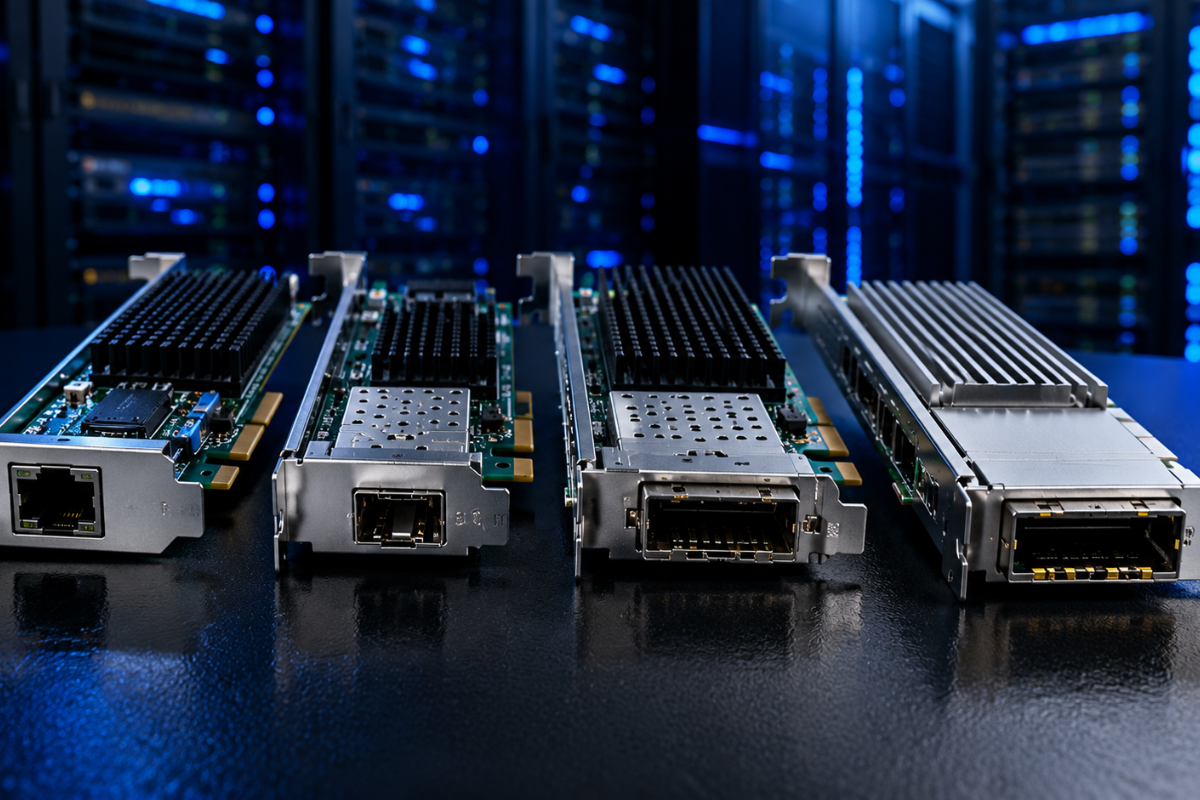
The most common server network interfaces are RJ45, SFP+, QSFP+, and QSFP28. Each has its own advantages and is designed for specific networking requirements.
In this guide, we'll compare these interfaces and help you determine which one is best for your infrastructure.
What is RJ45?
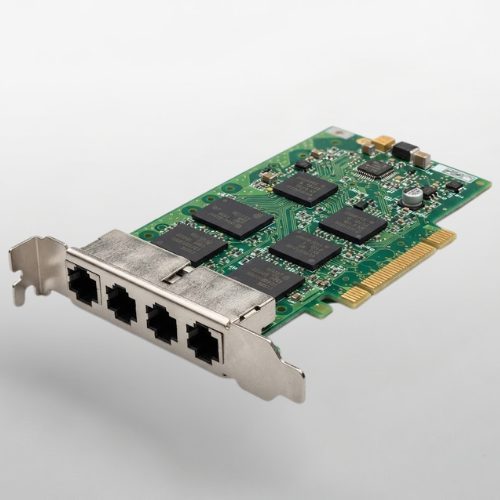
RJ45 is the standard Ethernet connector used in most office and business networks.
Advantages
- Affordable
- Easy installation
- Widely compatible
- Uses Cat5e/Cat6/Cat6A cables
Best For
- Small offices
- Business networks
- Basic servers
- General networking
Typical Speeds
- 1GbE
- 10GbE (with suitable cabling)
What is SFP+?
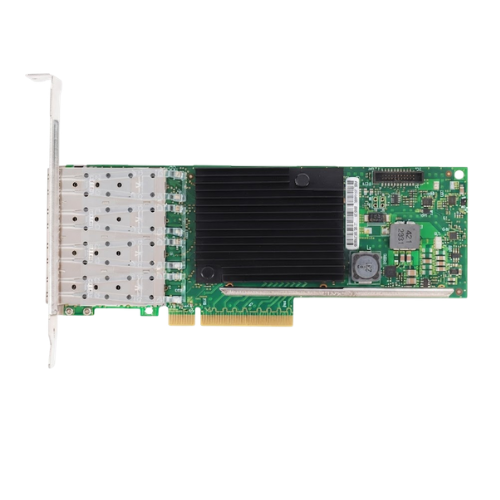
SFP+ (Small Form-factor Pluggable Plus) is commonly used for 10 Gigabit Ethernet.
Unlike RJ45, SFP+ supports fiber optic modules and Direct Attach Copper (DAC) cables.
Advantages
- Higher performance
- Lower latency
- Longer transmission distance
- Lower power consumption
Best For
- Enterprise servers
- Storage networks
- Virtualization
- Data centers
Typical Speed
What is QSFP+?
QSFP+ stands for Quad Small Form-factor Pluggable Plus.
It is designed for 40 Gigabit Ethernet.
Advantages
- Very high bandwidth
- Supports enterprise workloads
- Excellent for cloud environments
Best For
- Data Centers
- Enterprise Core Networks
- High-speed Switching
Typical Speed
What is QSFP28?
QSFP28 is the next generation of QSFP technology.
It supports 100 Gigabit Ethernet connections.
Advantages
- Extremely fast
- Designed for future-ready infrastructure
- Excellent scalability
- Supports AI and Cloud Computing
Best For
- Large Data Centers
- AI Infrastructure
- HPC Clusters
- Enterprise Backbone Networks
Typical Speed
Comparison Table
| Interface | Speed | Cable Type | Best For |
|---|
| RJ45 | 1GbE / 10GbE | Copper Ethernet | Office & Business |
| SFP+ | 10GbE | Fiber / DAC | Enterprise Servers |
| QSFP+ | 40GbE | Fiber | Data Centers |
| QSFP28 | 100GbE | Fiber | High-End Enterprise |
Which One Should You Choose?
Choose RJ45 if:
- You have a standard office network.
- Budget is a priority.
- You need simple installation.
Choose SFP+ if:
- You need faster networking.
- You use enterprise servers.
- You require fiber connectivity.
Choose QSFP+ if:
- You manage large data centers.
- High bandwidth is required.
- Multiple servers communicate simultaneously.
Choose QSFP28 if:
- You need 100GbE networking.
- You operate cloud infrastructure.
- You require maximum performance.
Why Buy from ServerCard.in?
At ServerCard.in, we offer a complete range of RJ45, SFP+, QSFP+, and QSFP28 server network cards for businesses, IT professionals, and enterprise environments. Our products are carefully selected to ensure reliability, compatibility, and high performance.
Conclusion
Choosing the right network interface depends on your infrastructure, budget, and performance requirements. Whether you need a cost-effective RJ45 solution or a high-speed QSFP28 network card, investing in the right technology will improve your server performance and prepare your network for future growth.
FAQs
Which is faster, RJ45 or SFP+?
SFP+ supports dedicated 10GbE fiber connectivity with lower latency, making it ideal for enterprise networking.
Is QSFP+ better than SFP+?
QSFP+ offers higher bandwidth (40GbE) and is suitable for larger enterprise environments, while SFP+ is ideal for 10GbE applications.
Can I use RJ45 in a data center?
Yes, but many modern data centers prefer SFP+ or QSFP technologies for higher performance and scalability.